Study
Research Projects
1. Chemical Modification of Lipids in Food and Living Systems and Its Impacts
We comprehensively investigate chemical modification reactions of lipids, including oxidation and glycation, and evaluate their impacts on both food quality and biological systems.
1-1 Development of Isomer Discrimination Technologies for Primary Oxidation Products
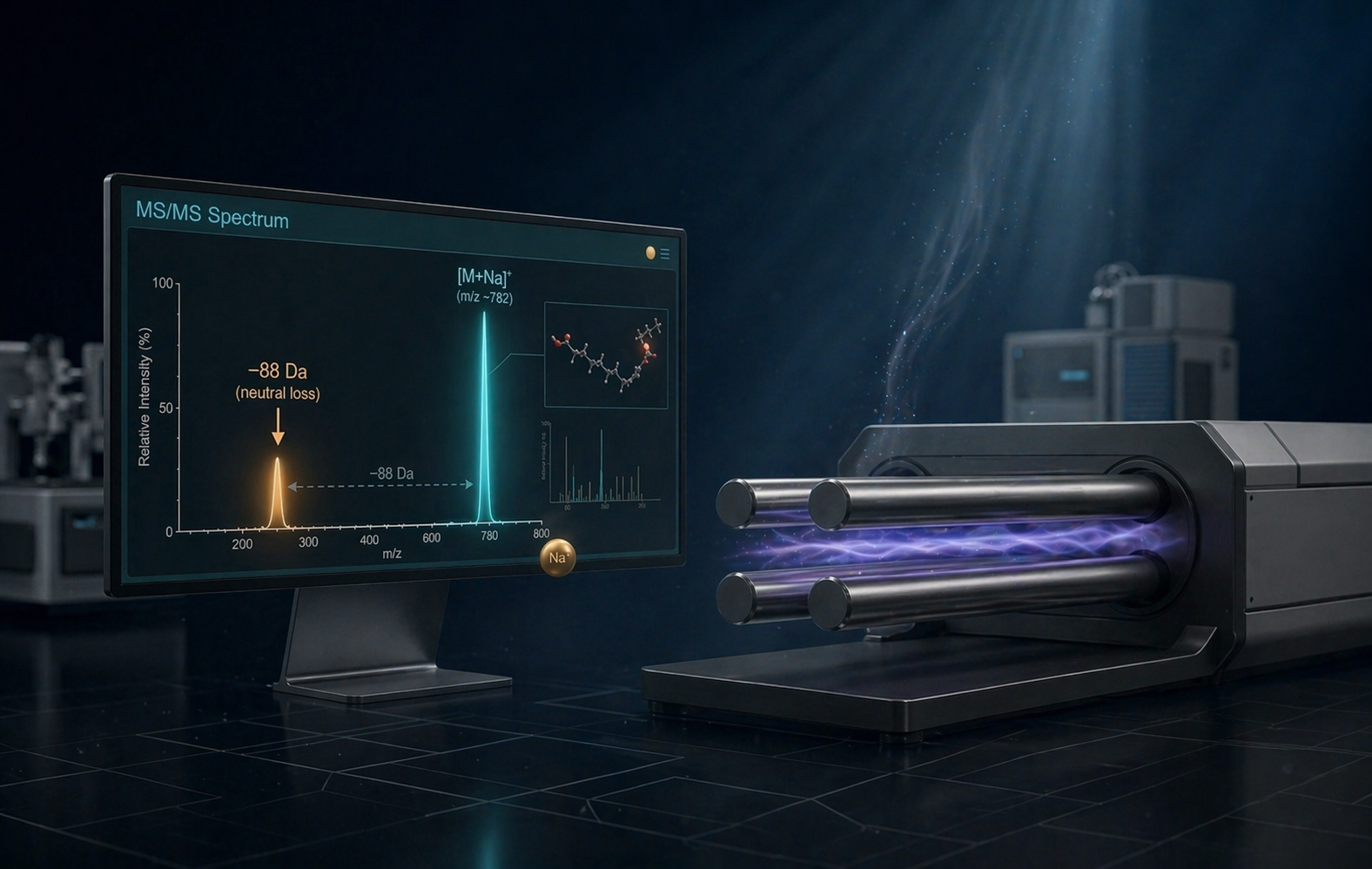
We are establishing world-class, proprietary analytical technologies to discriminate lipid hydroperoxides—the primary products of lipid oxidation—at the isomer level. Our approach leverages high-precision analytical instruments centered on mass spectrometry (MS), while also driving the development of rapid, non-destructive analytical methods utilizing near-infrared (NIR) spectroscopy.
1-2 Elucidation of Degradation Pathways of Lipid Oxidation Products
We trace the detailed processes (pathways) through which lipid hydroperoxides (primary oxidation products) further degrade and metabolize into various secondary products. In our analyses, we utilize our laboratory’s core strength in unique analytical methodologies, while integrating insights and techniques from organic synthesis and computational science to fully elucidate complex lipid oxidation phenomena.

1-3 Evaluation of the Impacts of Lipid Oxidation on Food and Living Systems
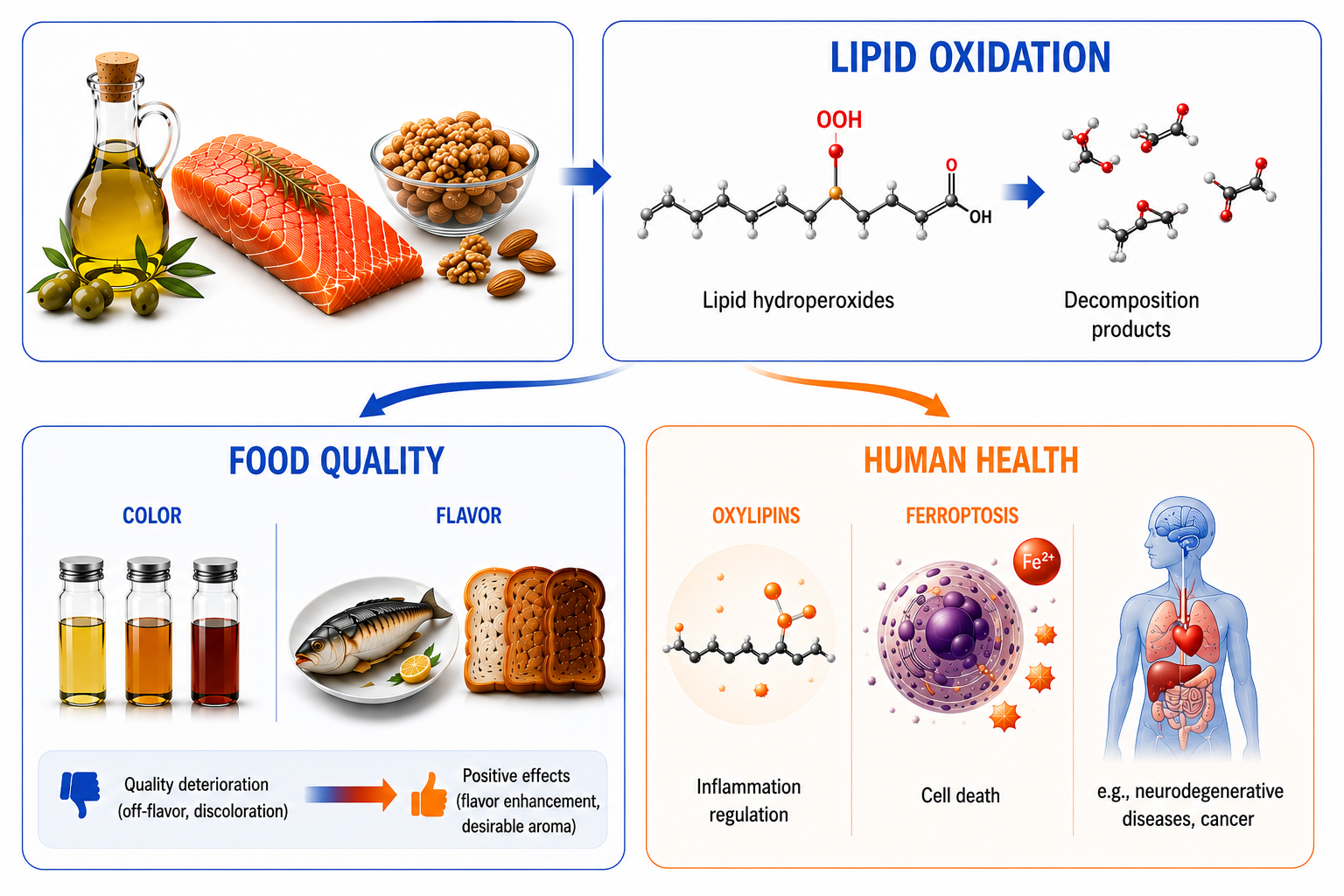
Building on the analytical technologies and insights developed in 1-1 and 1-2, we evaluate how lipid hydroperoxides and their degradation/metabolic products influence food quality, such as color and flavor (encompassing both positive and negative effects). Furthermore, we investigate their roles in human health, with a particular focus on their involvement in ferroptosis, a recently highlighted form of regulated cell death. We are also evaluating the health impacts of oxylipins, which are known for their high bioactivity among oxidized lipids.
1-4 Elucidation of Maillard Reaction Mechanisms Mediated by Lipid Glycation
Just as lipids react with oxygen (oxidation), they also react with sugars, inducing the "Maillard reaction (glycation)"—a phenomenon that forms the core of this research. Specifically, we are clarifying the entire complex reaction process from two distinct pathways: the mechanism where lipids themselves (such as phosphatidylethanolamine) react directly with sugars, and the mechanism where Maillard reaction products are generated from lipid oxidation degradation products without the direct involvement of sugars. Additionally, we investigate the impacts of these reactions on food color and flavor, as well as their effects on human health.
2. Discovery of Functional Components and Elucidation of Their Mechanisms of Action
In light of the impacts of lipid chemical modification clarified in Section 1, we conduct dual-approach research on functional components, including antioxidants, from both food and biological perspectives as outlined below.
2-1 Elucidation of Antioxidant Component Functions
We evaluate a wide range of antioxidant components, including fat-soluble vitamins (such as vitamin E and carotenoids), polyphenols (such as catechins, γ-oryzanol, and curcumin), as well as squalene and plasmalogens.
【Food: Quality Optimization】
We verify the efficacy of these components in preserving food flavor and quality. In doing so, we also consider their pro-oxidant (oxidation-promoting) tendencies, which can occur depending on dosage and conditions, aiming to propose optimal application strategies.
【In vivo: Unveiling In Vivo Realities】
We identify the exact structures (metabolites) that ingested components assume within the body after undergoing absorption and metabolism, and evaluate their functionality based on these actual in vivo structures.
2-2 Pioneering Novel Functional Components with Diverse Capabilities
We are similarly advancing the efficacy evaluation of novel components that go beyond the framework of conventional antioxidants, such as aza-sugars and estolides.